On January 7, 2014, Nigeria’s former president, Goodluck Jonathan, signed the Same-Sex Marriage (Prohibition) Bill (SSMPA) into law. The notional purpose of the SSMPA is to prohibit marriage between persons of the same sex. In reality, its scope is much wider. The law forbids any cohabitation between same-sex sexual partners and bans any “public show of same sex amorous relationship.” The SSMPA imposes a 10-year prison sentence on anyone who “registers, operates or participates in gay clubs, societies and organization” or “supports” the activities of such organizations. Punishments are severe, ranging from 10 to 14 years in prison. Such provisions build on existing legislation in Nigeria, but go much further: while the colonial-era criminal and penal codes outlawed sexual acts between members of the same sex, the SSMPA effectively criminalizes lesbian, gay, bisexual, and transgender (LGBT) persons based on sexual orientation and gender identity.
This report documents the human rights impact of the SSMPA on LGBT individuals and its effects on the activities of non-governmental organizations that provide services to LGBT people. This followed consultations with Nigeria-based LGBT activists and groups, and mainstream human rights organizations.
While existing legislation already criminalizes consensual same-sex conduct in Nigeria, the report found that the SSMPA, in many ways, officially authorizes abuses against LGBT people, effectively making a bad situation worse. The passage of the SSMPA was immediately followed by extensive media reports of high levels of violence, including mob attacks and extortion against LGBT people. Human rights groups and United Nations officials expressed grave concern about the scope the law, its vague provisions, and the severity of punishments. On February 5, 2014, following the passage of the SSMPA, the Special Rapporteur on Human Rights Defenders in Africa noted with concern in a press release, “the increase in cases of physical violence, aggression, arbitrary detention and harassment of human rights defenders working on sexual minority issues.
While Human Rights Watch found no evidence that any individual has been prosecuted or sentenced under the SSMPA, the report concludes that its impact appears to be far-reaching and severe. The heated public debate and heightened media interest in the law have made homosexuality more visible and LGBT people even more vulnerable than they already were. Many LGBT individuals interviewed by Human Rights Watch said that prior to the enactment of the SSMPA in January 2014, the general public objected to homosexuality primarily on the basis of religious beliefs and perceptions of what constitutes African culture and tradition. The law has become a tool being used by some police officers and members of the public to legitimize multiple human rights violations perpetrated against LGBT people. Such violations include torture, sexual violence, arbitrary detention, violations of due process rights, and extortion. Human Rights Watch research indicates that since January 2014, there have been rising incidents of mob violence, with groups of people gathering together and acting with a common intent of committing acts of violence against persons based on their real or perceived sexual orientation or gender identity.
For instance, in February 2014 in Gishiri village, Abuja, a group of approximately 50 people armed with machetes, clubs, whips, and metal wires dragged people from their homes and severely beat at least 14 men whom they suspected of being gay. Three victims told Human Rights Watch that their attackers chanted: “We are doing [President Goodluck] Jonathan’s work: cleansing the community of gays.” In February 2016 another victim Funke Olagbaye was lynched and mobbed to death by angry youth at Tanke,Ilorin the attackers shouted Haram : “Jungle justice! No more gays!”no more lesbians!” The law has created opportunities for people to engage in homophobic violence without fear of legal consequences, contributing significantly to a climate of impunity for crimes against LGBT people.
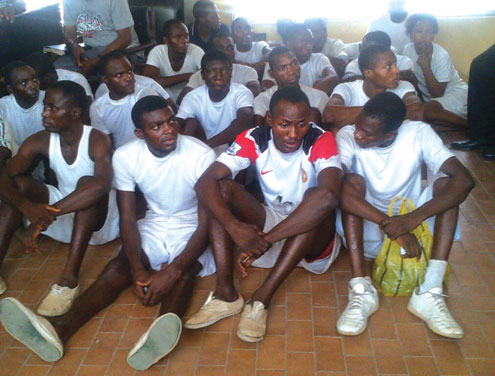
Arbitrary arrest and extortion by police is commonplace under the SSMPA. Interviewees in Ibadan and other places told Human Rights Watch that they had been detained by the police multiple times since the passage of the SSMPA. Human Rights Watch interviewed eight of the 21 young men who were arrested, but not charged, at a birthday party in Ibadan. They told Human Rights Watch that members of the public informed the police that gay men were gathered together and when police arrived and found a bag of condoms that belonged to an HIV peer educator, they were all arrested. They were held in police custody for four days, and released, without charge, after paying bribes ranging from 10,000-25,000 Naira (approximately US$32-64). These individuals said they had never been subjected to questioning, arrest, or detention prior to the enactment of this law. Individuals who have been arrested and detained are released on “bail,” usually after offering bribes to the police. Faced with 14 years’ imprisonment, several interviewees said they had little choice but to pay.
Lesbians and gay men interviewed by Human Rights Watch said that the law has had an insidious effect on individual self-expression. Since January 2014, several said that they had adopted self-censoring behavior by significantly and consciously altering their gender presentation to avoid detection or suspicion by members of the public and to avoid arrest and extortion. They told Human Rights Watch that this was not necessarily a major concern prior to the passage of the SSMPA. Lesbian and bisexual women in particular reported that fear of being perceived as “guilty by association” led them to avoid associating with other LGBT community members, increasing their isolation and, in some cases, eventually compelling them to marry an opposite-sex partner, have children, and conform to socially proscribed gender norms.
The SSMPA contributes significantly to a climate of impunity for crimes committed against LGBT people, including physical and sexual violence. LGBT victims of crime said the law inhibited them from reporting to authorities due to fear of exposure and arrest. “No way would we file a complaint,” Henry, a victim of mob violence in Lagos, said. “When it’s an LGBT issue, you can’t file a complaint.” Henry told Human Rights that the mob attack in June 2014 in Lagos was the first time that he had been a victim of violence because of his sexual orientation, and that prior to the SSMPA, he had no reason to file complaints with the police.
Interviewees, including representatives of mainstream human rights organizations, said the SSMPA has created opportunities for people to act out their homophobia with brutality and without fear of legal consequences. Under the auspices of the SSMPA, police have raided the offices of NGOs that provide legal and HIV services to LGBT communities. For example, shortly after the SSMPA passed in January 2014, police raided an HIV awareness meeting in Abuja and arrested 12 participants on suspicion of “promoting homosexuality.” They were detained in police custody, without charge, for three weeks, before paying a bribe of 100,000 Naira (approximately $318) to secure their release.
Punitive legal environments, stigma, and discrimination based on sexual orientation and gender identity, together with high levels of physical, psychological, or sexual violence against gay men and other men who have sex with men (MSM), impedes sustainable national responses to HIV. When acts of violence are committed or condoned by officials or national authorities, including law enforcement officials, this leads to a climate of fear that fuels human rights violations and deters gay men and other MSM from seeking and adhering to HIV prevention, treatment, care, and support services.
The SSMPA contravenes basic tenets of the Nigerian Constitution, including respect for dignity and prohibition of torture. It also goes against several regional and international human rights treaties which Nigeria has ratified, including the African Charter on Human and Peoples’ Rights (African Charter), the International Covenant on Economic, Social and Cultural Rights (ICESCR), and the International Covenant on Civil and Political Rights. Human rights treaties impose legal obligations on Nigeria to prohibit discrimination; ensure equal protection of the law; respect and protect rights to freedom of association, expression, privacy, and the highest attainable standard of health; prevent arbitrary arrests and torture or cruel, degrading, and inhuman treatment; and exercise due diligence in protecting persons, including LGBT individuals, from all forms of violence, whether perpetrated by state or non-state actors.
In November 2015, the African Commission on Human and Peoples’ Rights urged the Nigerian government to review the SSMPA in order to prohibit violence and discrimination on the basis of sexual orientation and gender identity and ensure access to HIV prevention, treatment, and care services for LGBT individuals.
Nigerian authorities should act swiftly to protect LGBT people from violence, whether committed by state or non-state actors. Law enforcement officials should stop all forms of abuse and violence against LGBT people, including arbitrary arrest and detention, torture in custody, and extortion, and without delay ensure that they are able to file criminal complaints against perpetrators.
The government of Nigeria, including the Ministry of Health and the National Agency for the Control of AIDS, should:
- Advocate for the repeal of the specific provisions of the SSMPA that criminalize the formation of and support to LGBT organizations;
- Promote effective measures to prevent discrimination on the basis of sexual orientation and gender identity in health care settings; and
- Ensure that key populations, including gay men, MSM, and transgender individuals have access to HIV services, care, and treatment.
The National Human Rights Commission should ensure that the Committee of Human Rights Experts, established in November 2015, mandated to compile a list of laws to be reviewed for compliance with human rights norms and standards, prioritizes the SSMPA for review. One of the key functions vested in national human rights institutions is to receive and investigate complaints of human rights abuses. In terms of the Human Rights Commission Act of 1995, as amended in 2010, the Commission enjoys quasi-judicial powers to summon persons, evidence, and to award compensation and enforce its decisions. The Commission should utilize this protective mandate to investigate human rights abuses committed against LGBT persons.